Dental treatment comparison calculator
Compare two options — for example a bridge versus an implant — over the years you'll keep them.

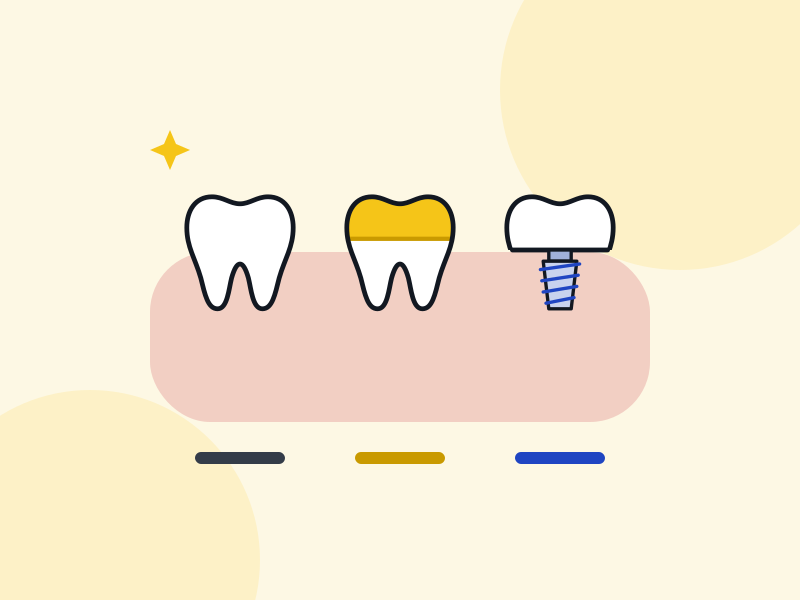
This tool compares two treatment options by dividing each upfront cost by how long it is expected to last, so you see the cost per year rather than just the price tag. It is most used in Australia to weigh an implant against a bridge or a crown against a large filling. The mistake people most often make is picking the cheaper option now without asking when it will need replacing and what that replacement will cost.
- Option A cost per year
- $225
- Option B cost per year
- $300
What affects the cost
- Expected lifespan: implants commonly last 20 years or more, bridges and crowns 10 to 15, dentures 5 to 10.
- What insurance pays on each option, which often differs sharply between a bridge and an implant.
- Maintenance costs along the way: relines for dentures, repairs, and eventual replacement of a failed option.
- Knock-on damage: a bridge requires cutting down neighbouring teeth, which may need treatment themselves later.
- Your age and health: a 25-year-old will replace a bridge more times than a 70-year-old.
- Financing costs if one option is borrowed and the other paid outright.
How this is calculated
- Cost per year = upfront cost ÷ expected lifespan.
- The cheaper upfront option is often dearer over time if it needs replacing sooner.
Insurance and rebates in Australia
Extras cover changes the comparison because major-dental limits cap what you get back on each option, and some funds rebate bridges and crowns but pay little or nothing towards implants. Check the item numbers for both options with your fund and enter the net figures. Remember that a replacement in ten years' time will be paid at that year's prices and against that year's limit.
Frequently asked questions
How long do implants, bridges and crowns last?
Implants commonly last 20 years or more, bridges and crowns 10 to 15, and dentures 5 to 10 before replacement. Your dentist can give a more specific estimate for your mouth, and that estimate is the number to enter.
Why compare cost per year instead of price?
Because a cheaper option that must be replaced twice can cost more overall than a dearer one that lasts. Cost per year puts both on the same footing without needing to guess future prices exactly.
Should I include insurance in the comparison?
Yes, use the net figure after the rebate for each option, since plans often cover a bridge but not an implant. The Insurance Rebate Calculator will give you each net figure.
What about the cost of a failed option?
A bridge that fails may take a supporting tooth with it, and a denture that loosens needs relines, which are real costs the simple lifespan figure does not capture. If you know them, add them to that option's upfront cost.
Is the longer-lasting option always better?
Not necessarily. Health, budget, and how long you expect to keep your own teeth all matter, and a cheaper option can be the right choice for a tooth you may lose anyway. The calculator gives you a fair number; you and your dentist make the call.
Related calculators
All patient calculators- Dental implant costEstimate what a dental implant will cost you after any insurance or rebate.Open calculator →
- Dental bridge costEstimate what a dental bridge will cost you after any insurance or rebate.Open calculator →
- Dental crown costEstimate what a dental crown will cost you after any insurance or rebate.Open calculator →
Ranges researched to 7 Sept 2026. Last updated 18 Sept 2026. See our methodology.